
September 2026 has become one of the most competitive months in the AI industry, with OpenAI, Anthropic, Google, and Meta introducing major new models within days of one another. The result is a new generation of AI systems designed not only to answer questions, but also to reason through difficult problems, write and review code, operate tools, work with large amounts of information, and complete longer multi-step tasks.
Four releases stand out: GPT-6 Astra, Claude Fable 5.1, Gemini 3.8 Flash, and Muse Spark 1.3.
But which one is actually the best?
There is no single winner for every use case. GPT-6 Astra is positioned for demanding end-to-end professional work, reasoning, coding, research, and computer use. Claude Fable 5.1 focuses heavily on long-running agentic work, coding, research, and complex knowledge tasks. Gemini 3.8 Flash combines strong reasoning with a lower-cost Flash architecture and a 1-million-token context window. Muse Spark 1.3 puts particular emphasis on agentic workflows, coding, and efficient long-horizon task execution.
This guide compares the four models by capabilities, context window, pricing, strengths, limitations, and ideal use cases so you can choose the right model instead of simply choosing the newest one.
Quick Answer: Which AI Model Is Best?
If you want the shortest possible answer:
- Best for demanding all-around professional work: GPT-6 Astra
- Best for long-running knowledge and coding projects: Claude Fable 5.1
- Best for price-to-performance and large-context workflows: Gemini 3.8 Flash
- Best for agentic coding and efficient multi-step workflows: Muse Spark 1.3
However, these recommendations depend on the task. Benchmark scores from different companies are not always directly comparable because models may be tested under different configurations, prompts, tools, and reasoning settings.
GPT-6 Astra vs Claude Fable 5.1 vs Gemini 3.8 Flash vs Muse Spark 1.3
| Model | Company | September 2026 Release | Context Window | Main Strength | API Pricing* |
| GPT-6 Astra | OpenAI | September 3, 2026 | 1.05M tokens | Reasoning, coding, research, computer use | $10 input / $50 output |
| Claude Fable 5.1 | Anthropic | September 1, 2026 | Large-context frontier model | Long-running agents, coding, research | $10 input / $50 output |
| Gemini 3.8 Flash | September 2026 | 1M tokens | Fast reasoning, agents, coding, enterprise workflows | $0.75 input / $3.75 output introductory | |
| Muse Spark 1.3 | Meta | September 2, 2026 | 1M-token class | Agentic workflows and coding | Pricing varies by API tier |
*API prices are token-based and can change. Gemini’s listed introductory rates apply through December 31, 2026. GPT-6 Astra’s current standard API pricing is $10 per million input tokens and $50 per million output tokens.
GPT-6 Astra: OpenAI’s Flagship Model for Complex World
OpenAI introduced GPT-6 Astra on September 3, 2026, describing it as its most capable model for difficult end-to-end work.
Astra is designed for tasks that require more than a simple question-and-answer interaction. OpenAI highlights improvements in reasoning, coding, research, computer use, cybersecurity, professional work, and document creation. The model can also create documents, spreadsheets, and presentations while adapting when requirements change.
What Makes GPT-6 Astra Different?
One of Astra’s most important characteristics is its focus on completing complex workflows rather than merely generating individual responses.
It can be used for:
- Complex reasoning
- Software engineering
- Research
- Computer-use tasks
- Document creation
- Spreadsheet generation
- Presentation creation
- Multi-step professional workflows
- Advanced cybersecurity-related work
OpenAI reports extremely high performance on several internal evaluations, including FrontierMath Tier 4, ARC-AGI-3, and ExploitBench. These figures are OpenAI-reported benchmark results, so they should be interpreted as company-reported evaluations rather than universal proof that Astra is better at every task.
GPT-6 Astra Context and Pricing
The current API documentation lists a 1,050,000-token context window and up to 128,000 output tokens.
Current standard API pricing is:
- Input: $10 per million tokens
- Cached input: $1 per million tokens
- Output: $50 per million tokens
The model supports multiple reasoning-effort levels, including low, medium, high, xhigh, and max.
Who Should Use GPT-6 Astra?
GPT-6 Astra is particularly suitable for:
- Professional researchers
- Software developers
- Technical teams
- Businesses handling complex workflows
- Advanced AI agents
- Users who need computer-use capabilities
- Large document and knowledge tasks
GPT-6 Astra: Pros and Cons
Pros
- Extremely strong reasoning capabilities
- Designed for complex end-to-end work
- Strong coding and research performance
- Computer-use capabilities
- 1M+ token context window
- Strong document and productivity workflows
Cons
- Expensive API pricing
- Not necessary for simple everyday questions
- Availability has been rolling out gradually
- Advanced capabilities require careful human oversight
Claude Fable 5.1: Built for Long-Running Agentic Work
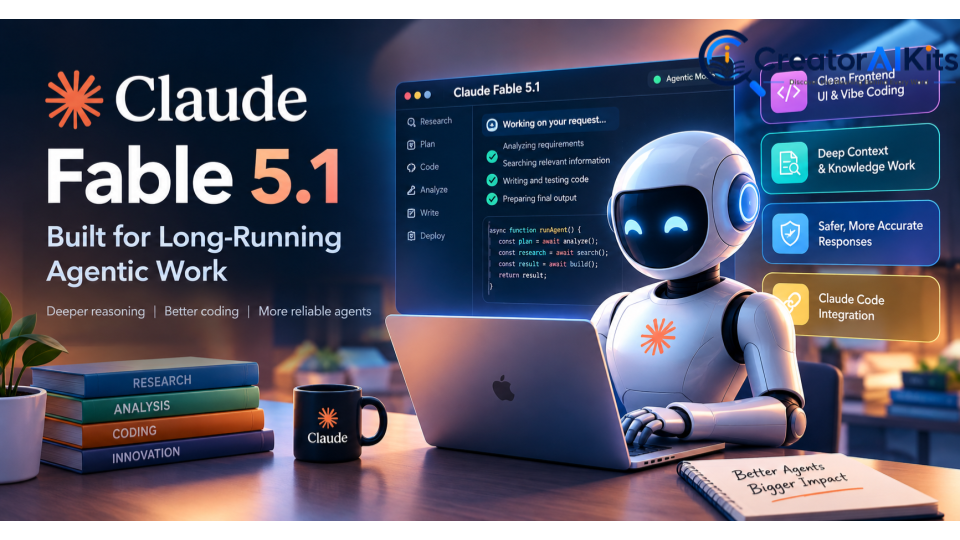
Anthropic released Claude Fable 5.1 on September 1, 2026.
Fable 5.1 is positioned as Anthropic’s most capable generally available model for ambitious, long-running work. Anthropic specifically emphasizes tasks that can continue for hours and span multiple applications or stages.
What Makes Claude Fable 5.1 Powerful?
Claude Fable 5.1 is designed for workloads where the AI needs to:
- Understand a large objective.
- Break it into smaller tasks.
- Use available tools.
- Recover when something goes wrong.
- Continue working across multiple stages.
- Produce a final deliverable.
Anthropic highlights applications including coding, research, browser operation, document analysis, and enterprise workflows.
Claude Fable 5.1 for Coding
Fable 5.1 is aimed at demanding software-engineering projects, including:
- Working across large codebases
- Code review
- Performance improvements
- Multi-step development
- Automated testing
- Design implementation
- Long-running coding sessions
Anthropic also highlights the model’s ability to use vision to evaluate coding outputs against a target design.
Claude Fable 5.1 for Documents and Research
Fable 5.1 can work with diagrams, charts, tables, files, and PDFs. This makes it particularly useful for document-heavy professional work such as research, analysis, finance, legal workflows, and architecture-related tasks.
Claude Fable 5.1 Pricing
Anthropic lists current API pricing at:
- Input: $10 per million tokens
- Output: $50 per million tokens
- Cache reads: $0.25 per million tokens
Anthropic says the lower cache-read price can reduce costs for typical and highly agentic workloads.
Claude Fable 5.1: Pros and Cons
Pros
- Excellent for long-running tasks
- Strong coding capabilities
- Strong research and knowledge work
- Good document and visual understanding
- Designed for agentic workflows
- Strong enterprise applications
Cons
- High API cost
- Not the best economic choice for simple high-volume tasks
- Some high-risk cybersecurity and biological capabilities are subject to additional safeguards
Anthropic says Fable 5.1 includes safeguards for potentially dangerous cybersecurity, biology, and chemistry applications.
Gemini 3.8 Flash: A Fast and Cost-Efficient Frontier Model
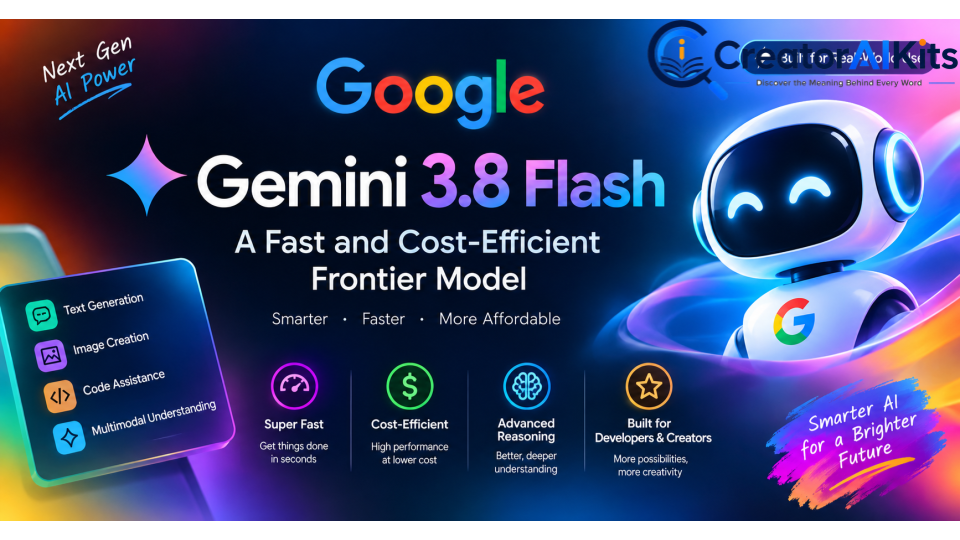
Google introduced Gemini 3.8 Flash in September 2026, positioning it as its most intelligent Flash model.
Unlike models designed primarily around maximum computational cost, Gemini 3.8 Flash emphasizes a combination of intelligence, speed, long context, autonomous agents, software engineering, and enterprise workflows. Google says the model is generally available and ready for production use.
Gemini 3.8 Flash Context Window
Gemini 3.8 Flash supports:
- 1 million-token context window
- Up to 64,000 output tokens
- Adjustable thinking levels: low, medium, and high
- Built-in tool support
This makes it particularly useful when an application needs to process large documents, long conversations, large codebases, or other extensive context.
Gemini 3.8 Flash for Coding and Agents
Google specifically highlights:
- Long-horizon software engineering
- Multi-file code refactoring
- Autonomous agents
- Multi-step planning
- Tool orchestration
- Enterprise workflows
- Large-scale data processing
Gemini 3.8 Flash is also being used as the default model for Google’s Managed Agents and Antigravity-related workflows.
Gemini 3.8 Flash Pricing
Its introductory API pricing is considerably lower than GPT-6 Astra and Claude Fable 5.1:
- Input: $0.75 per million tokens
- Output: $3.75 per million tokens
These introductory prices are listed through December 31, 2026. Google says standard pricing is scheduled to become $1.50 per million input tokens and $7.50 per million output tokens from January 1, 2027.
Who Should Choose Gemini 3.8 Flash?
It is especially attractive for:
- Developers building AI applications
- Startups watching API costs
- High-volume AI applications
- Autonomous-agent systems
- Large-context workflows
- Enterprise applications
- Coding and software engineering
Gemini 3.8 Flash: Pros and Cons
Pros
- Very competitive API pricing
- 1M-token context
- Strong coding capabilities
- Strong agentic workflows
- Adjustable reasoning levels
- Designed for production use
Cons
- It is a Flash-tier model rather than Google’s most expensive maximum-compute offering
- Benchmark comparisons should be interpreted carefully because evaluation configurations differ
Muse Spark 1.3: Meta’s Agentic Coding Specialist
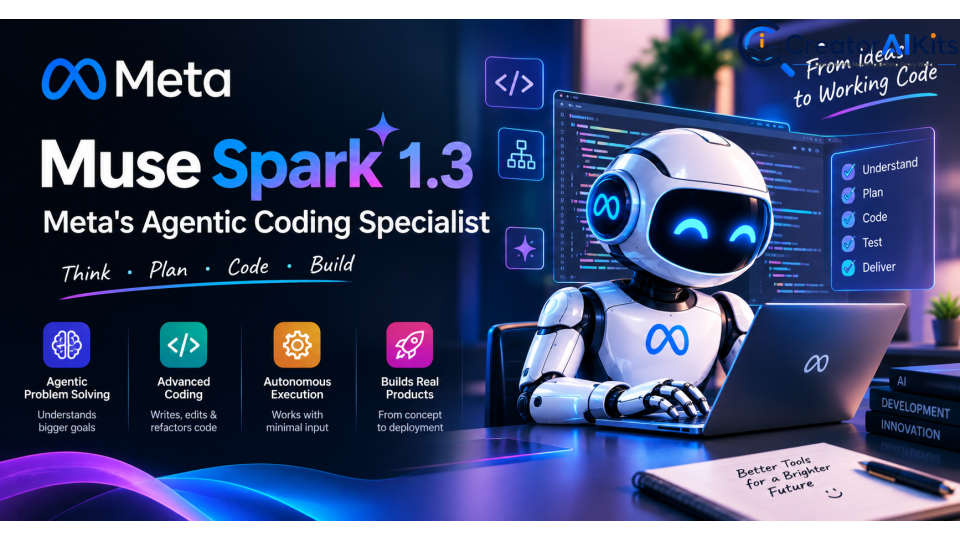
Meta released Muse Spark 1.3 on September 2, 2026, focusing heavily on agentic workflows and coding.
The model is available through Muse Code and the Meta Model API. Meta says the new version was trained to handle longer-horizon tasks, multiple workflows, complex instructions, and messy information more reliably.
What Makes Muse Spark 1.3 Interesting?
Muse Spark 1.3 is designed to work more like an AI collaborator than a simple chatbot.
Meta highlights improvements in:
- Long-horizon agentic tasks
- Coding
- Multi-step workflows
- Tool use
- Task planning
- Handling conflicting information
- Maintaining requirements throughout long tasks
- Asking clarifying questions
- Recognizing limitations
- Avoiding unsupported claims
This is particularly relevant for users who want an AI system to work through a larger project rather than simply answer one prompt.
Muse Spark 1.3 Coding Improvements
Meta says Muse Spark 1.3 is more efficient than Muse Spark 1.2 in common engineering workflows.
According to Meta’s own comparison, the model uses approximately:
- 20% fewer tool calls
- 25% fewer tokens
while producing cleaner coding output and requiring fewer unnecessary turns.
Muse Spark 1.3 Safety Improvements
Meta also reports improvements in adversarial robustness and resistance to prompt injection.
The model has been trained to better recognize consequential actions and exercise greater caution during complex agentic workflows.
Muse Spark 1.3: Pros and Cons
Pros
- Strong focus on agentic workflows
- Improved coding performance
- Better long-horizon task management
- More efficient tool use
- Stronger handling of complex instructions
- Available through Meta’s developer ecosystem
Cons
- Its strongest advantages are concentrated around coding and agentic workflows
- Independent benchmark comparisons are still developing
- Pricing and availability can vary by Meta API tier
GPT-6 Astra vs Claude Fable 5.1 vs Gemini 3.8 Flash vs Muse Spark 1.3: Detailed Comparison
The four models are not identical competitors.
For reasoning
GPT-6 Astra has the strongest overall positioning for extremely demanding reasoning and professional tasks, based on OpenAI’s current model documentation and reported evaluations.
For long-running knowledge work
Claude Fable 5.1 is particularly compelling because Anthropic designed it around long-running, asynchronous tasks and complex knowledge workflows.
For cost-efficient AI development
Gemini 3.8 Flash has a major advantage in current API pricing. Its introductory input and output rates are dramatically below the listed API rates of Astra and Fable 5.1.
For agentic coding
Muse Spark 1.3 is especially interesting for developers who want an AI coding and agentic workflow system with improved tool efficiency.
Which AI Model Is Best for Coding?
There is no universal coding winner because coding benchmarks measure different aspects of software engineering.
However:
- GPT-6 Astra: excellent for complex software engineering and computer-use workflows.
- Claude Fable 5.1: excellent for large, long-running coding projects.
- Gemini 3.8 Flash: strong for production applications where cost and speed matter.
- Muse Spark 1.3: particularly attractive for agentic coding and long-horizon engineering workflows.
For a developer building an AI coding agent, I would evaluate at least quality, tool-call efficiency, latency, context length, reliability, and total cost, rather than choosing a model from a single benchmark.
Which Model Is Best for Business?
For businesses, the answer depends on the workflow.
GPT-6 Astra is a strong choice when the priority is complex end-to-end professional work, computer use, research, and document generation.
Claude Fable 5.1 is particularly attractive for long-running research, analysis, coding, and enterprise knowledge work.
Gemini 3.8 Flash is attractive for companies that need large-context processing and high-volume AI workloads while controlling API costs.
Muse Spark 1.3 is especially relevant to engineering organizations building agentic coding workflows.
Which Model Is Best for AI Agents?
AI agents need more than intelligence. They need reliable planning, tool use, context management, error recovery, and appropriate caution around consequential actions.
All four models are moving toward this agentic direction.
GPT-6 Astra emphasizes computer use and end-to-end professional work. Claude Fable 5.1 emphasizes long-running autonomous work. Gemini 3.8 Flash emphasizes autonomous agents and tool orchestration. Muse Spark 1.3 focuses heavily on long-horizon agentic workflows and efficient tool use.
Which Model Is Cheapest?
For the currently published standard API rates, Gemini 3.8 Flash is the clear price leader among these four.
Its introductory price through December 31, 2026 is:
- $0.75 per million input tokens
- $3.75 per million output tokens
By comparison:
- GPT-6 Astra: $10 / $50
- Claude Fable 5.1: $10 / $50
Muse Spark 1.3 has multiple API tiers, so its effective cost depends on the endpoint and usage arrangement.
Are These Models Actually Better Than Previous AI Models?
In many areas, yes—but “better” does not mean every model is better at every task.
The September 2026 releases show a broader shift in AI development:
From:
Question → Answer
Toward:
Goal → Plan → Tools → Reasoning → Execution → Verification → Final result
This is one of the most important changes in modern AI.
The new generation is increasingly designed to operate inside real workflows, including software development, research, business analysis, document creation, browser or computer interaction, and multi-step automation.
What Should You Choose?
Choose GPT-6 Astra if:
You need the strongest overall system for difficult professional work, advanced reasoning, coding, research, and computer-use workflows.
Choose Claude Fable 5.1 if:
Your work involves long-running research, complex coding projects, documents, analysis, or asynchronous agentic workflows.
Choose Gemini 3.8 Flash if:
You want strong capabilities with significantly lower API costs, a 1M-token context window, and production-oriented agentic and coding capabilities.
Choose Muse Spark 1.3 if:
Your priority is agentic coding, long-horizon workflows, tool efficiency, and working through complex multi-step engineering tasks.
Frequently Asked Questions
What are the four major AI models released in September 2026?
The four models covered in this comparison are GPT-6 Astra from OpenAI, Claude Fable 5.1 from Anthropic, Gemini 3.8 Flash from Google, and Muse Spark 1.3 from Meta. Their release dates are September 3, September 1, September 2026, and September 2, respectively.
Which is the most powerful AI model in September 2026?
There is no objectively universal winner. GPT-6 Astra is positioned as OpenAI’s most capable model for difficult end-to-end work, while Claude Fable 5.1, Gemini 3.8 Flash, and Muse Spark 1.3 have different strengths in long-running agents, cost-efficient production workloads, and agentic coding.
Is GPT-6 Astra better than Claude Fable 5.1?
It depends on the task. GPT-6 Astra is particularly strong for complex reasoning, computer use, coding, research, and professional workflows. Claude Fable 5.1 is designed around ambitious long-running tasks, coding, research, and enterprise knowledge work. Neither should be declared universally superior without specifying the workload.
Is Gemini 3.8 Flash cheaper than GPT-6 Astra?
Yes. Gemini 3.8 Flash’s current introductory API price is $0.75 per million input tokens and $3.75 per million output tokens, compared with $10 and $50 for GPT-6 Astra.
Does Gemini 3.8 Flash have a 1-million-token context window?
Yes. Google’s current documentation lists a 1-million-token context window and up to 64,000 output tokens for Gemini 3.8 Flash.
What is Muse Spark 1.3 best for?
Muse Spark 1.3 is particularly focused on agentic workflows and coding. Meta says it is designed for longer-horizon tasks, multiple workflows, complex instructions, and more efficient engineering workflows.
Is Muse Spark 1.3 open source?
Not at launch. Meta’s September 2 announcement says an open-weights release is part of its future roadmap, which means readers should not describe the currently released model as open-weight.
Which AI model is best for coding?
All four are capable coding models. GPT-6 Astra and Claude Fable 5.1 are strong choices for complex software engineering and long-running projects, Gemini 3.8 Flash is attractive for cost-sensitive production development, and Muse Spark 1.3 is particularly focused on agentic coding and tool efficiency.
Which AI model is best for business users?
For complex professional work, GPT-6 Astra is a strong option. For long-running research and knowledge work, Claude Fable 5.1 is compelling. For high-volume workloads where cost matters, Gemini 3.8 Flash is particularly attractive. Engineering teams building coding agents may prefer Muse Spark 1.3.
Will these AI models replace human workers?
Not completely. They can automate increasingly sophisticated tasks, but human review remains important, especially for high-impact decisions, sensitive information, security, financial work, legal matters, and other areas where mistakes can have serious consequences.
Final Verdict
September 2026 has demonstrated how quickly frontier AI is moving from conversational assistants toward reasoning systems and AI agents capable of completing multi-step work.
GPT-6 Astra stands out as a powerful all-around choice for complex end-to-end professional work, computer use, research, coding, and advanced reasoning.
Claude Fable 5.1 is especially compelling for long-running research, coding, document-heavy workflows, and autonomous knowledge work.
Gemini 3.8 Flash may be the most attractive option for developers who need strong intelligence at a much lower API cost, particularly for large-context and production workloads.
Muse Spark 1.3 brings a strong focus on agentic coding, long-horizon tasks, and efficient tool use, making it an interesting choice for software engineers and AI-agent builders.
The biggest lesson is that there is no single “best AI model” for everyone. The right model depends on the job. A professional evaluation should consider capability, reliability, context, latency, tool use, safety, and total cost—not just a headline benchmark score.
As these models continue to receive updates throughout 2026, their real-world performance and availability may change. For important technical or business decisions, always verify current documentation and pricing directly from the model provider.

Welcome to CreatorAIKits! I’m passionate about learning and exploring AI tools, creativity, and technology.
I’m continuously researching and gaining hands-on experience with different AI tools and technologies.
My goal is to share simple, useful, and practical AI information for beginners and everyday users.
Thanks for visiting CreatorAIKits!